top of page
_edited_edited.png)


.png)

AEGIS- The Ergonomic Shoulder Press Fitness Bench
AEGIS addresses the unique demands of shoulder presses. It prevents injuries by reducing pressure on the spine and lumbar region while enhancing tailored support.
With ergonomic elements integrated into its padding, its seat cushion and backrest are set to optimal posture positions, and its contoured lower back protrusion teaches beginners to properly arch their bodies and engage their cores.


Ergonomics Research

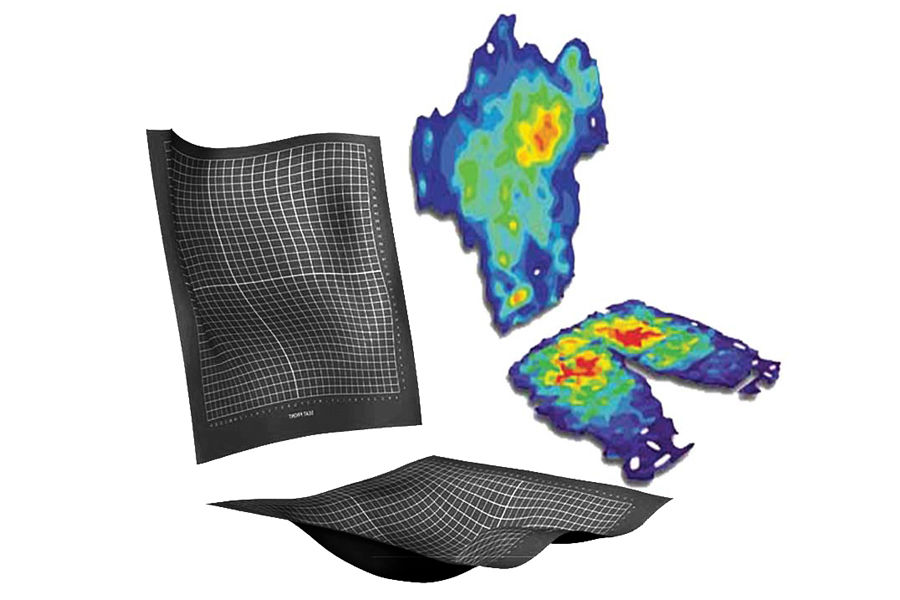
We collected back-pressure data from 8 participants using a thin pressure-sensor film, then converted the raw matrices into heatmaps.
These visual patterns guided our ergonomic surface refinement.


Working Process


I sketched the back-support curvature based on muscle anatomy and earlier ergonomics research, then scaled it to real body size through projection and transferred it onto purple foam to create the low-fidelity prototype.


Iterated to the Best Form
We tested multiple foam-shape combinations and selected the one that offered the best ergonomic support, comfort, and overall visual balance.


Revopoint INSPIRE 3D Scanner
I scanned the prototype to capture its exact shape and proportions.
This ensured all physical details were recorded accurately.
The scan was converted into a mesh model, ready for refinement and reverse engineering.


Hold your mouse to interact with the model
AEGIS addresses the unique demands of shoulder presses. It prevents injuries by reducing pressure on the spine and lumbar region while enhancing tailored support.

Reverse Engineering
Using the Revopoint 3D scanner, I captured a full-scale, dimensionally accurate digital model of the existing equipment. This scan preserved all key proportions, angles, and surface transitions.
The scanned mesh was then used as the foundation for reverse-engineering the geometry, allowing us to rebuild a precise CAD model and develop new structural modifications with confidence.


.png)

Adjustable Lumbar Support
The seat pad adjusts to accommodate different leg lengths and posture needs, helping users stabilize their hips and maintain proper form during shoulder-press training.
A door-latch–style locking mechanism secures the pad position with a firm, reassuring click, ensuring stable support even under load and allowing quick repositioning between sets.


Adjustable Headrest
The adjustable headrest supports the neck during shoulder-press motions by keeping the cervical spine aligned and reducing unnecessary strain.
Its sliding mechanism adapts to different user heights, providing stable posture and added comfort throughout the exercise.

Adjustable Seat Pad
The adjustable headrest supports the neck during shoulder-press motions by keeping the cervical spine aligned and reducing unnecessary strain.
Its sliding mechanism adapts to different user heights, providing stable posture and added comfort throughout the exercise.

bottom of page